Have you ever wanted a dessert that feels special but does not require hours in the kitchen? Maybe you are tired of the same cookies, cakes, and ice cream. You want something refreshing, comforting, and packed with real flavor.
That is where mango sticky rice comes in.
This famous dessert combines sweet, juicy mangoes with soft, chewy sticky rice and rich coconut sauce. The flavors are simple, but together they create something truly unforgettable.
The best part?
You do not need fancy ingredients or professional cooking skills. With a few easy steps, you can make a restaurant-style dessert right at home. Once you taste the creamy coconut rice with sweet golden mangoes, you will understand why people around the world love this dessert so much.
What Is This Recipe?
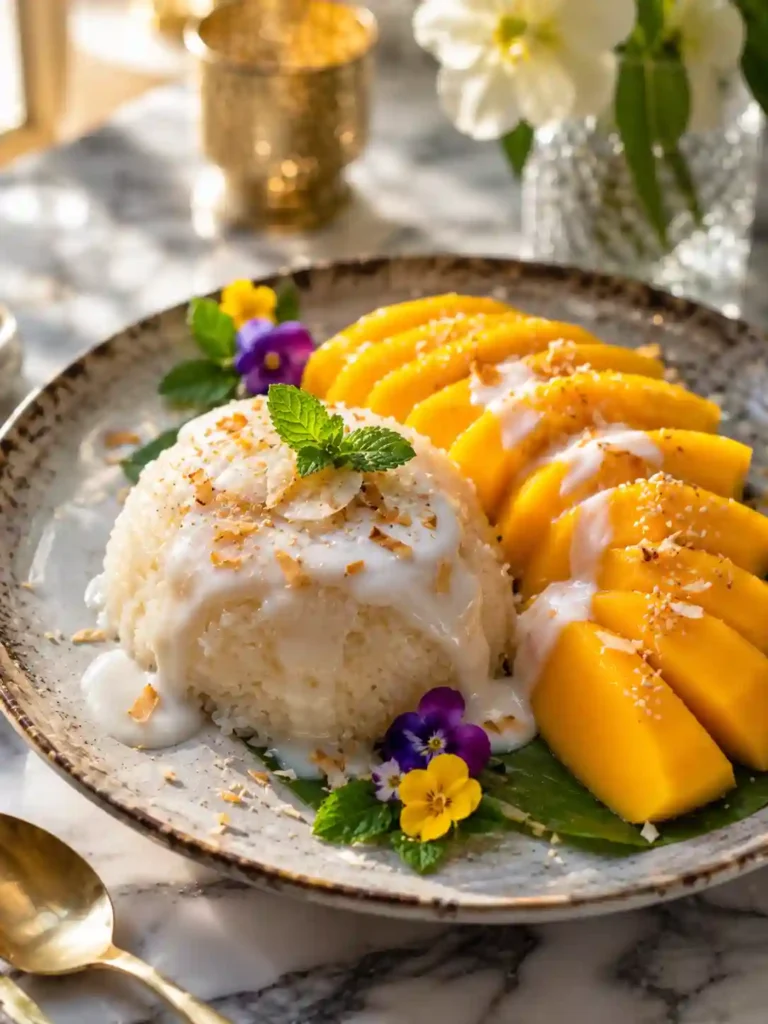
Mango sticky rice is a popular Thai-inspired dessert made with glutinous sticky rice, fresh mango slices, and sweet coconut sauce.
The rice is soft, slightly chewy, and soaked in creamy coconut milk. The mango adds natural sweetness and a refreshing tropical flavor.
What makes this dessert special is the contrast of textures. You get smooth mango, rich coconut cream, and tender sticky rice all in one bite.
It is simple, beautiful, and incredibly satisfying.
Why You Will Love This Recipe
- Uses simple ingredients that are easy to find.
- Tastes like a restaurant-quality dessert.
- Perfect balance of creamy and fruity flavors.
- Great for family dinners and special occasions.
- Naturally gluten-free.
- Budget-friendly compared to ordering takeout.
- Can be made ahead of time.
- Beautiful presentation with very little effort.
- Comforting while still feeling light and refreshing.
- Easy for beginners to master.
Here’s where most people get this wrong…
Many people rush the rice cooking process. Properly cooked sticky rice should be soft and chewy, not mushy or hard.
Ingredients
For the Sticky Rice:
- 1½ cups glutinous sticky rice.
- 2 cups water for soaking and steaming.
- Sticky rice is different from regular rice, so use the correct variety for the best texture.
For the Coconut Sauce:
- 1 can (13.5 ounces) full-fat coconut milk.
- ⅓ cup granulated sugar.
- ¼ teaspoon salt.
- Full-fat coconut milk creates a rich, creamy sauce. Light coconut milk can make the dessert less flavorful.
For Serving:
- 2 large ripe mangoes, peeled and sliced.
- 1 tablespoon toasted sesame seeds or toasted coconut flakes.
- Fresh mint leaves for garnish (optional).
Helpful Tips:
- Choose ripe mangoes that feel slightly soft when gently pressed.
- Ataulfo or honey mangoes work especially well because they are naturally sweet and less fibrous.
- Toasted coconut flakes add extra texture and flavor.
- If you like extra sweetness, reserve some coconut sauce for drizzling over the finished dessert.
How to Make Mango Sticky Rice
Step 1: Soak the Rice
Place the sticky rice into a large bowl and cover it completely with water. Allow it to soak for at least 4 hours, though overnight is even better. This step helps the grains absorb moisture before cooking. When properly soaked, the rice cooks more evenly and develops the signature chewy texture. After soaking, drain the rice well and rinse lightly. The grains should look plump and slightly translucent. Do not skip this step because it greatly affects the final texture. Good sticky rice starts with patience. The extra waiting time creates a much better dessert in the end.
Step 2: Steam the Rice
Transfer the soaked rice into a steamer basket lined with cheesecloth or parchment paper. Steam the rice for about 25 to 30 minutes. As it cooks, the rice becomes soft, tender, and slightly sticky. Avoid boiling the rice because steaming gives the traditional texture. Check the rice near the end of cooking. The grains should feel soft but still hold their shape. Stir gently halfway through if needed. The aroma will become warm and comforting. Properly steamed rice should look glossy and slightly chewy rather than wet or mushy.
Step 3: Prepare the Coconut Mixture
While the rice steams, add the coconut milk, sugar, and salt to a saucepan. Heat over medium-low heat and stir continuously. Do not let the mixture boil. The goal is to dissolve the sugar and create a smooth, creamy sauce. The coconut milk should become silky and slightly thickened. Reserve about half a cup of the sauce for serving later. The remaining sauce will be mixed directly into the rice. The sweet coconut aroma filling your kitchen is a sign that everything is coming together beautifully.
Step 4: Combine Rice and Coconut Sauce
Place the warm steamed rice into a large bowl. Slowly pour most of the coconut mixture over the rice while gently stirring. Every grain should become coated with the rich sauce. Cover the bowl and allow the rice to rest for 20 minutes. During this time, the rice absorbs the coconut milk and becomes incredibly soft and flavorful. The texture should be creamy, moist, and slightly chewy. This resting period is one of the most important parts of the recipe because it allows the flavors to fully develop.
Step 5: Assemble and Serve
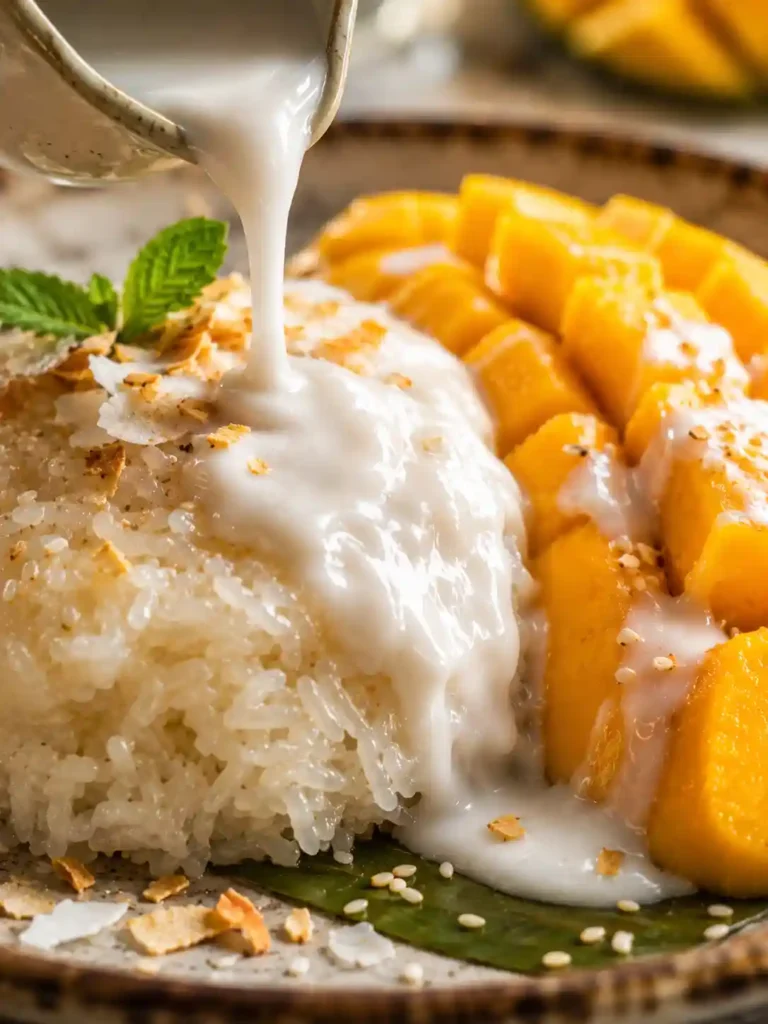
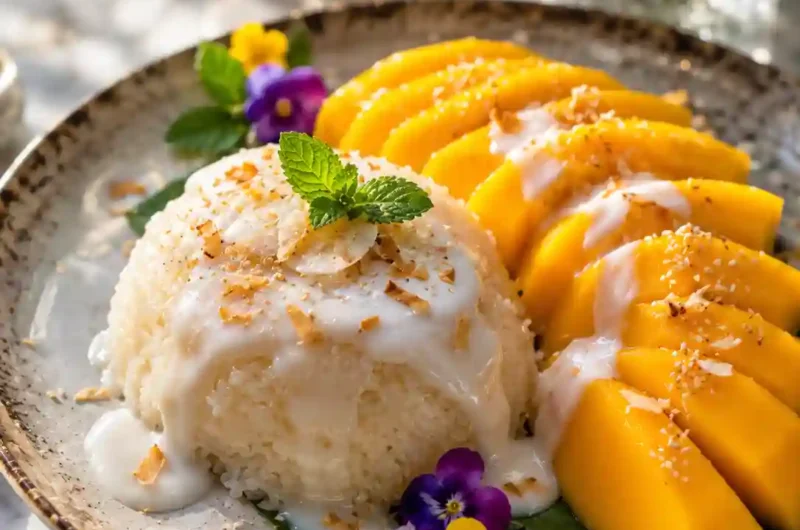
Arrange a generous scoop of coconut sticky rice on a serving plate. Place sliced mango next to the rice in a neat fan shape. Drizzle the reserved coconut sauce over the top. Sprinkle with toasted sesame seeds or coconut flakes for extra texture. The bright golden mango and creamy white rice create a beautiful presentation. Every bite should deliver sweet mango flavor, rich coconut cream, and tender chewy rice. Serve immediately for the best experience.
This small trick makes a huge difference…
Warm the coconut sauce slightly before serving. The warm sauce creates an even creamier texture and richer flavor.
Pro Tips
- Use ripe mangoes for maximum sweetness and juiciness.
- Soak the rice overnight whenever possible.
- Steam instead of boil for authentic texture.
- Reserve extra coconut sauce for serving.
- Stir gently to avoid crushing rice grains.
- Use full-fat coconut milk for richer flavor.
- Toast coconut flakes before garnishing.
- Let the rice rest after mixing with coconut sauce.
- Serve slightly warm for the best texture.
- Use freshly sliced mangoes right before serving.
Common Mistakes to Avoid
- Skipping the soaking step.
- Using regular rice instead of sticky rice.
- Overcooking the rice until mushy.
- Boiling the coconut milk aggressively.
- Choosing unripe mangoes.
- Forgetting to reserve serving sauce.
- Serving rice too cold.
- Adding too much sugar.
- Not allowing rice to absorb the coconut mixture.
- Using low-fat coconut milk.
- Overmixing the rice.
- Preparing mangoes too early.
- Storing assembled portions for too long.
Variations and Customization Ideas
High Protein Version
Add a scoop of vanilla protein powder to the coconut sauce for extra protein.
Vegan Version
The traditional recipe is naturally vegan when using plant-based sugar.
Quick Version
Use pre-cooked sticky rice to save preparation time.
Chocolate Mango Sticky Rice
Drizzle melted dark chocolate over the finished dessert.
Coconut Mango Deluxe
Add toasted coconut chips and coconut cream.
Berry Mango Version
Serve with fresh strawberries or blueberries.
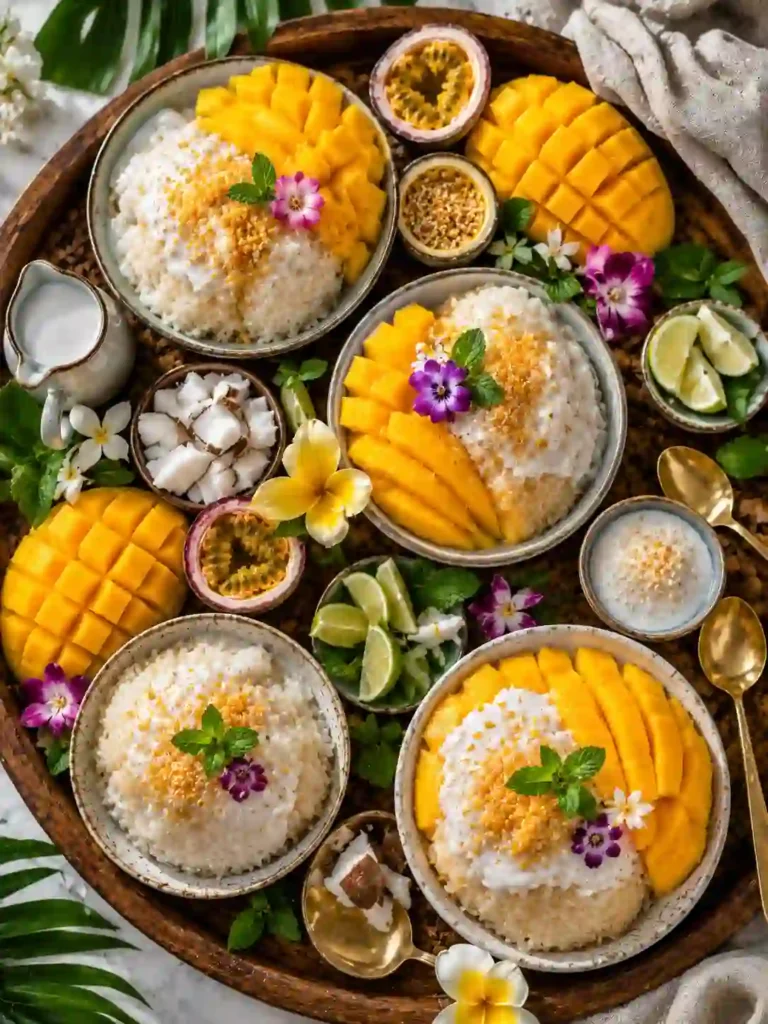
Tropical Fruit Version
Add pineapple, kiwi, or passion fruit slices.
Now let’s make it even better…
Top your mango sticky rice with a scoop of coconut ice cream for an unforgettable tropical dessert experience.
Serving Ideas
- Serve after a family dinner.
- Enjoy during summer gatherings.
- Bring to potluck parties.
- Pair with iced tea.
- Serve as a weekend treat.
- Enjoy during movie nights.
- Add to holiday dessert tables.
- Serve at brunch gatherings.
Storage & Reheating
Store leftover sticky rice in an airtight container in the refrigerator for up to 3 days.
Store sliced mango separately for best freshness.
To reheat, microwave the rice for 20 to 30 seconds and add a small splash of coconut milk.
Avoid freezing assembled portions because the mango texture may change.
Nutrition Facts (Approximate Per Serving)
- Calories: 320
- Carbohydrates: 52g
- Protein: 4g
- Fat: 11g
- Fiber: 3g
- Sugar: 18g
Quick Summary (Scannable)
- Easy Thai-inspired dessert
- Sweet mango and creamy coconut flavor
- Soft, chewy sticky rice
- Naturally gluten-free
- Perfect for parties and family meals
- Budget-friendly ingredients
- Easy make-ahead option
- Beautiful tropical presentation
When To Eat This
Mango sticky rice fits into so many moments of life.
Need a comforting dessert after dinner? This is perfect.
Want something special for guests? Everyone loves it.
Looking for a satisfying afternoon snack? A small serving hits the spot.
Craving something sweet after a workout? The rice and mango provide quick energy.
Tropical Mango Sticky Rice Dessert Recipes You’ll Want Every Week
Course: Dessert4
servings30
minutes40
minutes300
kcalIngredients
For the Sticky Rice:
1½ cups glutinous sticky rice.
2 cups water for soaking and steaming.
Sticky rice is different from regular rice, so use the correct variety for the best texture.
For the Coconut Sauce:
1 can (13.5 ounces) full-fat coconut milk.
⅓ cup granulated sugar.
¼ teaspoon salt.
Full-fat coconut milk creates a rich, creamy sauce. Light coconut milk can make the dessert less flavorful.
For Serving:
2 large ripe mangoes, peeled and sliced.
1 tablespoon toasted sesame seeds or toasted coconut flakes.
Fresh mint leaves for garnish (optional).
Directions
- Soak the Rice
Place the sticky rice into a large bowl and cover it completely with water. Allow it to soak for at least 4 hours, though overnight is even better. This step helps the grains absorb moisture before cooking. When properly soaked, the rice cooks more evenly and develops the signature chewy texture. After soaking, drain the rice well and rinse lightly. The grains should look plump and slightly translucent. Do not skip this step because it greatly affects the final texture. Good sticky rice starts with patience. The extra waiting time creates a much better dessert in the end. - Steam the Rice
Transfer the soaked rice into a steamer basket lined with cheesecloth or parchment paper. Steam the rice for about 25 to 30 minutes. As it cooks, the rice becomes soft, tender, and slightly sticky. Avoid boiling the rice because steaming gives the traditional texture. Check the rice near the end of cooking. The grains should feel soft but still hold their shape. Stir gently halfway through if needed. The aroma will become warm and comforting. Properly steamed rice should look glossy and slightly chewy rather than wet or mushy. - Prepare the Coconut Mixture
While the rice steams, add the coconut milk, sugar, and salt to a saucepan. Heat over medium-low heat and stir continuously. Do not let the mixture boil. The goal is to dissolve the sugar and create a smooth, creamy sauce. The coconut milk should become silky and slightly thickened. Reserve about half a cup of the sauce for serving later. The remaining sauce will be mixed directly into the rice. The sweet coconut aroma filling your kitchen is a sign that everything is coming together beautifully. - Combine Rice and Coconut Sauce
Place the warm steamed rice into a large bowl. Slowly pour most of the coconut mixture over the rice while gently stirring. Every grain should become coated with the rich sauce. Cover the bowl and allow the rice to rest for 20 minutes. During this time, the rice absorbs the coconut milk and becomes incredibly soft and flavorful. The texture should be creamy, moist, and slightly chewy. This resting period is one of the most important parts of the recipe because it allows the flavors to fully develop. - Assemble and Serve
Arrange a generous scoop of coconut sticky rice on a serving plate. Place sliced mango next to the rice in a neat fan shape. Drizzle the reserved coconut sauce over the top. Sprinkle with toasted sesame seeds or coconut flakes for extra texture. The bright golden mango and creamy white rice create a beautiful presentation. Every bite should deliver sweet mango flavor, rich coconut cream, and tender chewy rice. Serve immediately for the best experience.
Notes
- Soak the rice overnight whenever possible.
- Use full-fat coconut milk for richer flavor.
About