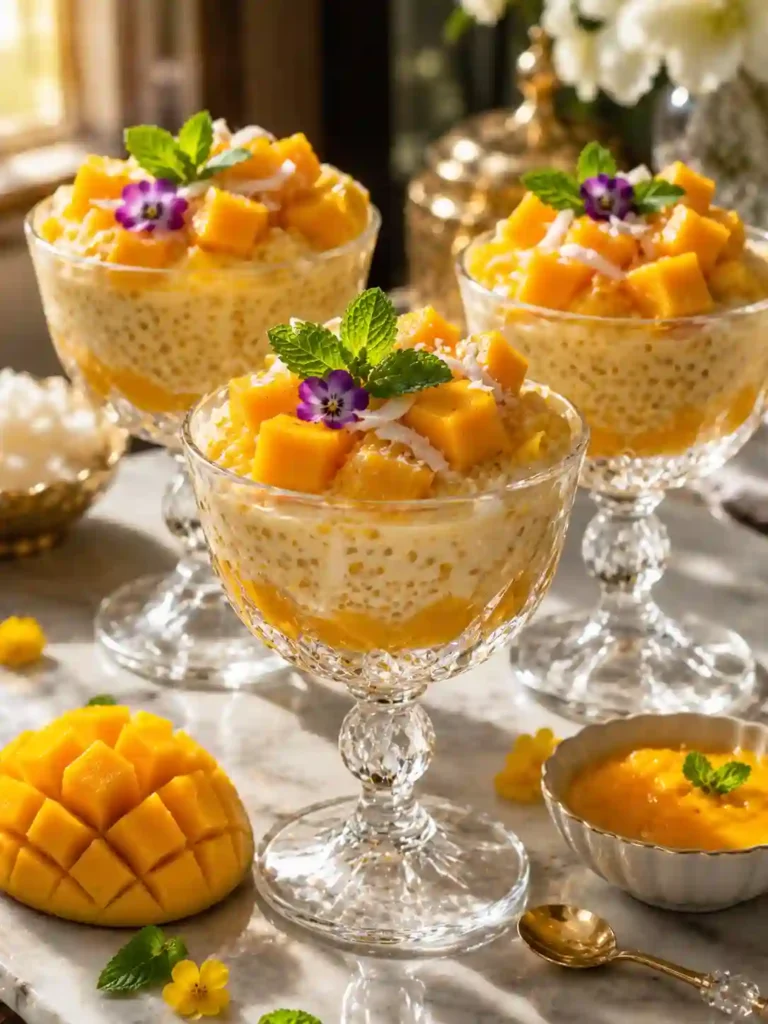
Have you ever wanted a dessert that feels rich and satisfying but still light and refreshing? Maybe cakes feel too heavy, and ice cream does not always hit the spot.
You want something fruity.
Something creamy.
Something that tastes like summer in every spoonful.
That is exactly why mango sago has become a favorite dessert around the world. It combines sweet juicy mangoes, creamy coconut milk, and soft chewy sago pearls into one incredibly delicious treat. Best of all, it looks fancy but is surprisingly easy to make at home.
Once you try it, you may find yourself making it again and again.
What Is This Recipe?
Mango sago is a popular Asian dessert made with fresh mangoes, cooked sago pearls, and creamy coconut milk.
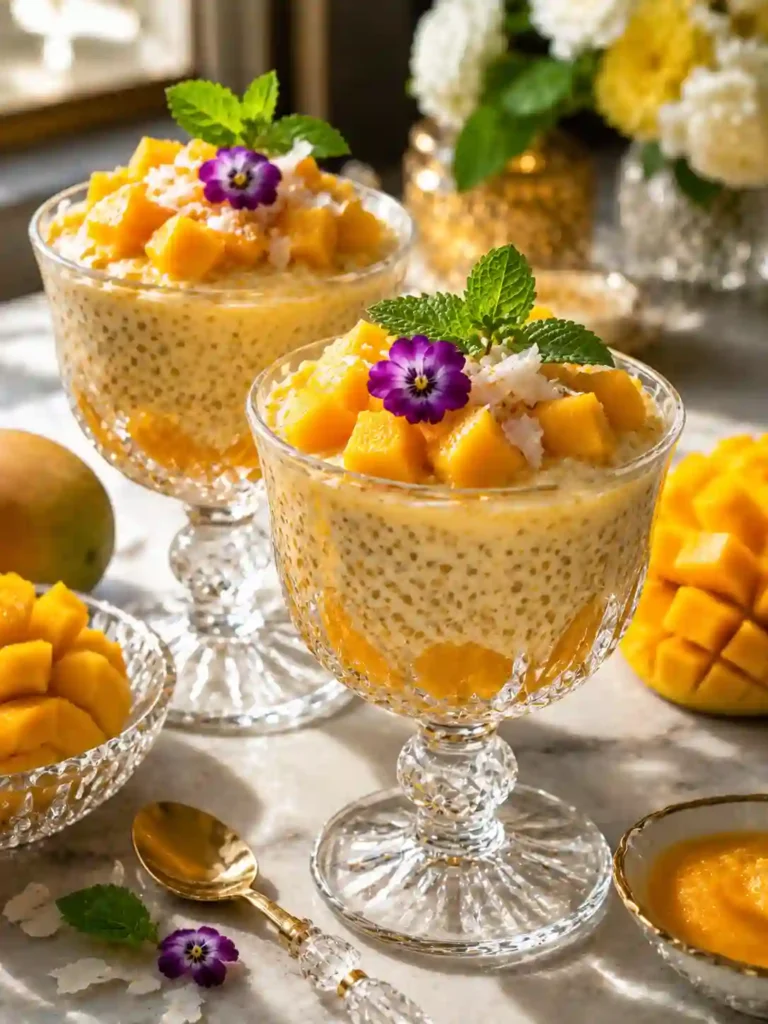
The mango creates a naturally sweet tropical flavor, while the sago pearls add a fun chewy texture. Coconut milk ties everything together with a rich and silky finish.
What makes this dessert special is its balance. It feels creamy without being too heavy and sweet without being overwhelming.
It is refreshing, beautiful, and perfect for warm weather.
Why You Will Love This Recipe
- Uses simple ingredients that are easy to find.
- Ready with minimal cooking.
- Refreshing and perfect for hot days.
- Naturally packed with real fruit flavor.
- Budget-friendly compared to restaurant desserts.
- Beautiful presentation for guests.
- Easy to customize with different fruits.
- Great make-ahead dessert.
- Creamy without feeling too heavy.
- Perfect for beginners.
Here’s where most people get this wrong…
Many people overcook the sago pearls. This turns them mushy instead of soft and pleasantly chewy.
Ingredients
For the Mango Base:
- 3 cups ripe mango chunks, fresh or frozen.
- Choose very ripe mangoes for the sweetest flavor and smoothest texture.
- Ataulfo or honey mangoes work especially well.
For the Creamy Mixture:
- 1 can (13.5 ounces) full-fat coconut milk.
- Full-fat coconut milk creates a rich and creamy dessert.
- Light coconut milk can be used but may reduce creaminess.
- 1 cup whole milk or evaporated milk.
- Adds smoothness and balances the coconut flavor.
- ¼ cup sugar or honey.
- Adjust based on the sweetness of your mangoes.
For the Sago Pearls:
- ½ cup small sago pearls.
- These create the signature chewy texture.
- Do not substitute with regular tapioca pearls unless necessary.
For Garnish:
- 1 fresh mango, diced.
- 1 tablespoon toasted coconut flakes.
- Fresh mint leaves.
- Optional passion fruit pulp for extra tropical flavor.
Helpful Tip:
Always rinse cooked sago pearls with cold water. This prevents them from sticking together and helps maintain their chewy texture.
How to Make Mango Sago
Step 1: Cook the Sago Pearls
Bring a large pot of water to a gentle boil. Add the sago pearls and stir immediately to prevent sticking. Continue cooking for about 12 to 15 minutes. The pearls will slowly become translucent with tiny white centers remaining. Turn off the heat and cover the pot. Let the pearls sit for another 10 minutes. During this time, they finish cooking naturally. Drain the pearls and rinse thoroughly under cold water. The pearls should feel soft, smooth, and slightly chewy. Set them aside while you prepare the mango mixture. Properly cooked sago should never feel hard or mushy.
Step 2: Blend the Mango Mixture
Add the mango chunks into a blender. Pour in the coconut milk, milk, and sweetener. Blend until completely smooth and creamy. The mixture should look thick, silky, and bright golden in color. Taste the mixture before moving forward. If your mangoes are less sweet, add a little extra sugar or honey. Blend again for a few seconds. The texture should be smooth enough to pour easily but still rich and creamy. This mango base is where most of the flavor comes from, so use the best mangoes you can find.
Step 3: Combine Everything Together
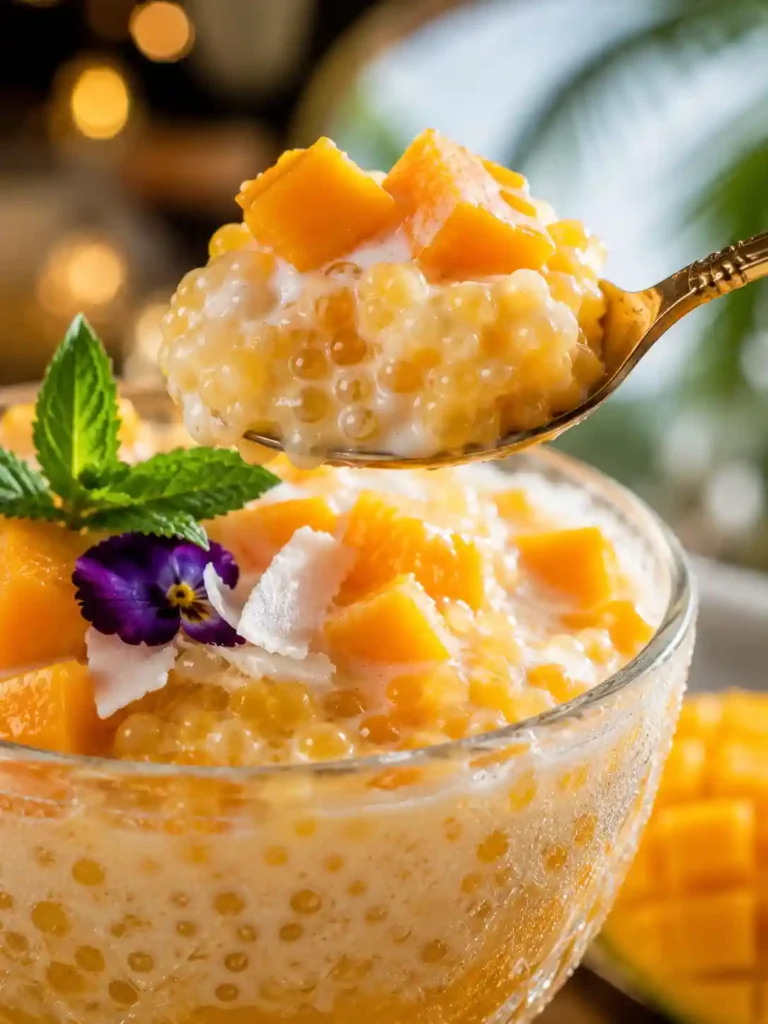
Transfer the mango mixture into a large serving bowl. Add the cooked sago pearls and gently stir until evenly distributed. The pearls should float throughout the mixture rather than clump together. As you stir, the dessert becomes thick, creamy, and visually appealing. Every spoonful should contain both mango and sago. If the mixture feels too thick, add a splash of milk. If it feels too thin, chill it for a while. The final consistency should be smooth, creamy, and easy to scoop.
Step 4: Chill Before Serving
Cover the bowl and place it in the refrigerator for at least one hour. Chilling allows the flavors to blend together beautifully. The coconut milk becomes creamier, and the mango flavor becomes more vibrant. The dessert should feel cool, refreshing, and silky when served. Many people skip this step, but it makes a huge difference. The texture improves and the overall flavor becomes richer and more balanced. Patience is rewarded here.
Step 5: Garnish and Serve
Spoon the chilled mango sago into serving bowls or dessert glasses. Top with fresh mango cubes, toasted coconut flakes, mint leaves, or passion fruit pulp. The bright colors make the dessert look beautiful and inviting. Every spoonful delivers creamy mango flavor, chewy sago pearls, and refreshing tropical sweetness. Serve immediately and enjoy.
This small trick makes a huge difference…
Blend a small portion of diced mango separately and swirl it into the dessert just before serving. It creates bursts of fresh mango flavor in every bite.
Pro Tips
- Use the ripest mangoes available for the best flavor.
- Chill serving bowls before serving.
- Rinse sago pearls thoroughly after cooking.
- Stir pearls occasionally while cooking.
- Use full-fat coconut milk for extra creaminess.
- Taste the mango mixture before chilling.
- Add diced mango right before serving for freshness.
- Let the dessert chill at least one hour.
- Use fresh fruit garnishes for color and texture.
- Serve cold for the most refreshing experience.
Common Mistakes to Avoid
- Overcooking the sago pearls.
- Using unripe mangoes.
- Skipping the cold-water rinse.
- Adding too much sweetener.
- Using watery coconut milk.
- Not chilling long enough.
- Blending mangoes with tough fibers.
- Adding hot sago directly into cold mixtures.
- Forgetting to stir while cooking pearls.
- Using old mangoes with dull flavor.
- Making the mixture too thick.
- Serving immediately without chilling.
- Storing uncovered in the refrigerator.
Variations and Customization Ideas
High Protein Version
Add vanilla protein powder or Greek yogurt for extra protein.
Vegan Version
Use only coconut milk and skip dairy milk.
Quick Version
Use frozen mango chunks for faster preparation.
Mango Passion Fruit Sago
Add fresh passion fruit pulp for extra tropical flavor.
Mango Strawberry Sago
Blend strawberries into part of the mixture for colorful layers.
Mango Pineapple Sago
Add pineapple chunks for extra sweetness and texture.
Mango Coconut Deluxe
Top with coconut cream and toasted coconut flakes.
Now let’s make it even better…
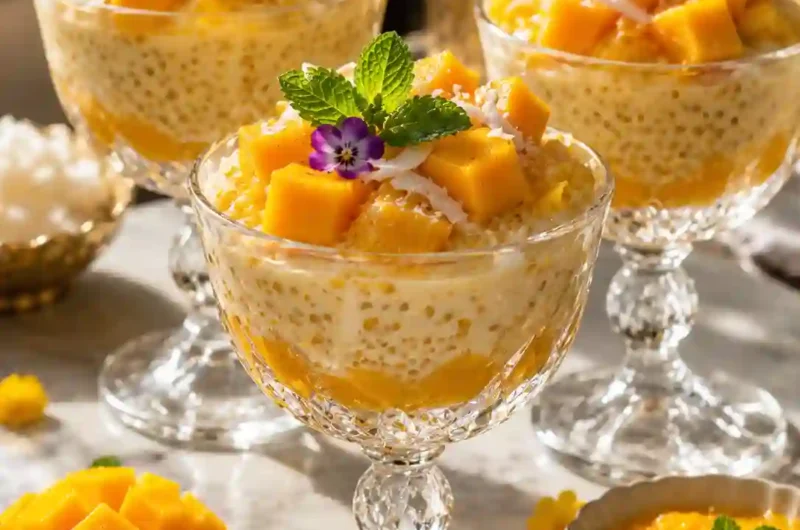
Serve your mango sago in clear dessert glasses with layered mango cubes for a stunning presentation that looks straight from a luxury café.
Serving Ideas
- Serve after dinner.
- Enjoy on hot summer afternoons.
- Bring to family gatherings.
- Add to a dessert buffet.
- Serve at birthday parties.
- Enjoy as a weekend treat.
- Pair with tropical fruit platters.
- Use as a refreshing holiday dessert.
Storage & Reheating
Store mango sago in an airtight container in the refrigerator.
It stays fresh for up to 3 days.
Stir gently before serving because separation may occur.
Do not freeze because the texture of the sago pearls can change.
No reheating is needed. This dessert is best served cold.
Nutrition Facts (Approximate Per Serving)
- Calories: 240
- Carbohydrates: 34g
- Protein: 3g
- Fat: 10g
- Fiber: 2g
- Sugar: 22g
Quick Summary (Scannable)
- Easy tropical dessert
- Creamy coconut flavor
- Sweet mango goodness
- Fun chewy sago texture
- Perfect for warm weather
- Beginner-friendly recipe
- Great make-ahead dessert
- Beautiful presentation
When To Eat This
Mango sago fits perfectly into many moments of everyday life.
Need a refreshing afternoon snack? Grab a chilled bowl.
Looking for a light dessert after dinner? This is ideal.
Want a tropical treat after a workout? The fruit provides natural energy.
Craving something sweet late at night? Mango sago feels satisfying without being overly heavy.
It is also perfect for parties, summer gatherings, holidays, and family celebrations.
Refreshing Mango Sago Dessert Recipes Perfect for Hot Summer Days
Course: Dessert4
servings30
minutes40
minutes300
kcalIngredients
For the Mango Base:
3 cups ripe mango chunks, fresh or frozen.
Choose very ripe mangoes for the sweetest flavor and smoothest texture.
Ataulfo or honey mangoes work especially well.
For the Creamy Mixture:
1 can (13.5 ounces) full-fat coconut milk.
Full-fat coconut milk creates a rich and creamy dessert.
Light coconut milk can be used but may reduce creaminess.
1 cup whole milk or evaporated milk.
Adds smoothness and balances the coconut flavor.
¼ cup sugar or honey.
Adjust based on the sweetness of your mangoes.
For the Sago Pearls:
½ cup small sago pearls.
These create the signature chewy texture.
Do not substitute with regular tapioca pearls unless necessary.
For Garnish:
1 fresh mango, diced.
1 tablespoon toasted coconut flakes.
Fresh mint leaves.
Optional passion fruit pulp for extra tropical flavor.
Directions
- Cook the Sago Pearls
Bring a large pot of water to a gentle boil. Add the sago pearls and stir immediately to prevent sticking. Continue cooking for about 12 to 15 minutes. The pearls will slowly become translucent with tiny white centers remaining. Turn off the heat and cover the pot. Let the pearls sit for another 10 minutes. During this time, they finish cooking naturally. Drain the pearls and rinse thoroughly under cold water. The pearls should feel soft, smooth, and slightly chewy. Set them aside while you prepare the mango mixture. Properly cooked sago should never feel hard or mushy. - Blend the Mango Mixture
Add the mango chunks into a blender. Pour in the coconut milk, milk, and sweetener. Blend until completely smooth and creamy. The mixture should look thick, silky, and bright golden in color. Taste the mixture before moving forward. If your mangoes are less sweet, add a little extra sugar or honey. Blend again for a few seconds. The texture should be smooth enough to pour easily but still rich and creamy. This mango base is where most of the flavor comes from, so use the best mangoes you can find. - Combine Everything Together
Transfer the mango mixture into a large serving bowl. Add the cooked sago pearls and gently stir until evenly distributed. The pearls should float throughout the mixture rather than clump together. As you stir, the dessert becomes thick, creamy, and visually appealing. Every spoonful should contain both mango and sago. If the mixture feels too thick, add a splash of milk. If it feels too thin, chill it for a while. The final consistency should be smooth, creamy, and easy to scoop. - Chill Before Serving
Cover the bowl and place it in the refrigerator for at least one hour. Chilling allows the flavors to blend together beautifully. The coconut milk becomes creamier, and the mango flavor becomes more vibrant. The dessert should feel cool, refreshing, and silky when served. Many people skip this step, but it makes a huge difference. The texture improves and the overall flavor becomes richer and more balanced. Patience is rewarded here. - Garnish and Serve
Spoon the chilled mango sago into serving bowls or dessert glasses. Top with fresh mango cubes, toasted coconut flakes, mint leaves, or passion fruit pulp. The bright colors make the dessert look beautiful and inviting. Every spoonful delivers creamy mango flavor, chewy sago pearls, and refreshing tropical sweetness. Serve immediately and enjoy.
Notes
- Rinse sago pearls thoroughly after cooking.
- Use fresh fruit garnishes for color and texture.
About