

Do you ever want a dessert that is soft, creamy, and a little different from the usual chocolate cakes? Something that feels light but still rich and satisfying?
You’re not alone.
Many people try custard cakes, but they end up too watery, too dense, or lacking flavor.
But here’s the good news…
This coconut custard cake recipe is simple, easy, and gives you a perfectly soft, creamy, and slightly golden dessert every time.
It’s smooth, rich, and full of coconut flavor—yet light enough to enjoy anytime.
One bite… and you’ll want another.
What Is This Recipe?
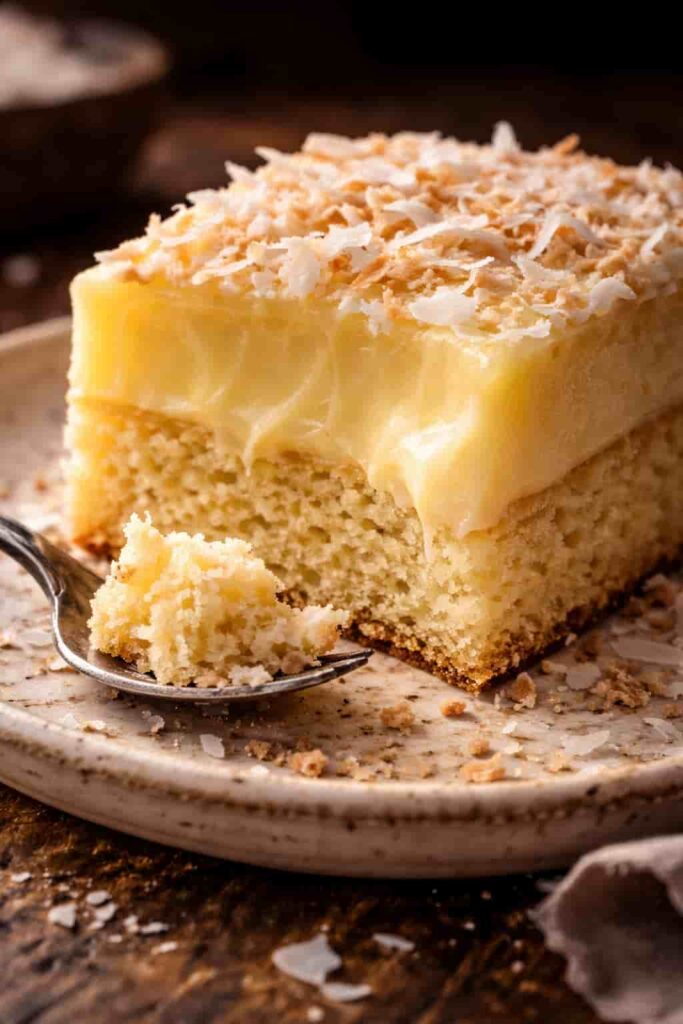
Coconut custard cake is a soft dessert that forms its own layers while baking.
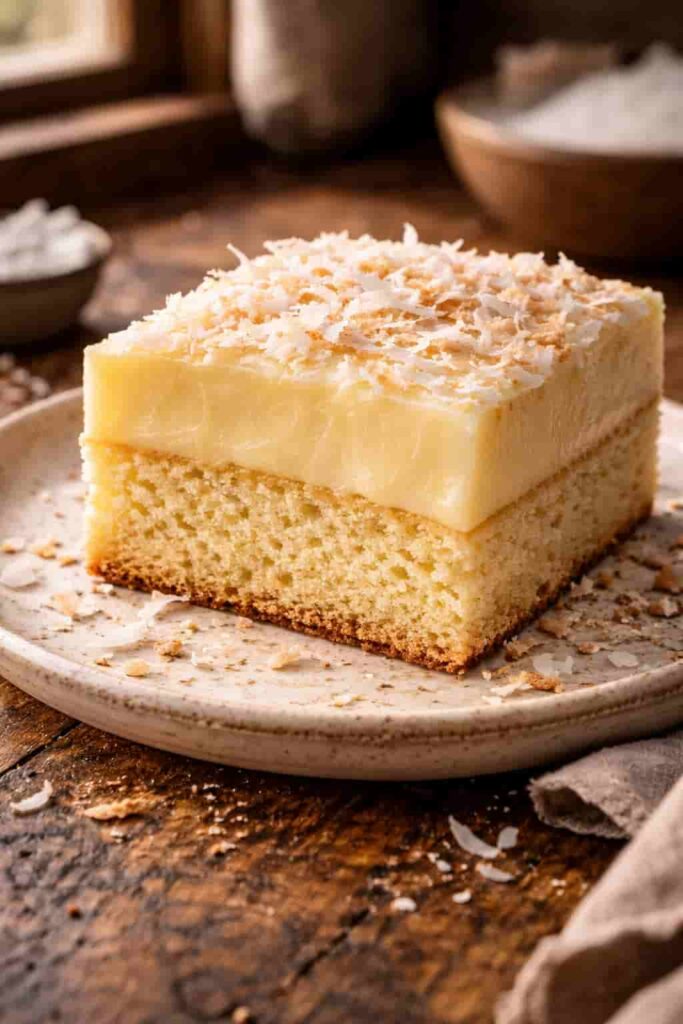
The bottom becomes slightly firm like a cake, while the top stays creamy like custard.
What makes it special is this magic texture. You mix everything in one batter, but it bakes into two beautiful layers.
It’s simple, unique, and so satisfying.
Why You Will Love This Recipe
- Soft and creamy texture that melts in your mouth
- Light dessert that doesn’t feel too heavy
- Easy one-bowl recipe with simple steps
- Budget-friendly ingredients you already have
- Perfect for tea time or dessert cravings
- Naturally sweet coconut flavor
- Great make-ahead dessert
Here’s where most people get this wrong… They expect it to be like a regular cake and overbake it.
Ingredients
- 1/2 cup all-purpose flour – gives structure to the base layer while keeping it soft
- 1 cup sugar – adds sweetness and helps create that custard texture
- 1 cup shredded coconut – gives flavor and a slightly chewy texture
- 4 large eggs – very important for the custard structure and richness
- 1/2 cup melted butter – adds flavor and smoothness (you can use oil as a substitute)
- 2 cups milk – creates the custard layer, use full-fat for best results
- 1 teaspoon vanilla extract – enhances overall flavor
- 1/4 teaspoon salt – balances sweetness and brings out coconut taste
Tip: You can use coconut milk instead of regular milk for a stronger coconut flavor.
How To Make (Step-by-Step)
1. Prepare the Batter
Start by preheating your oven to 170°C. Grease a baking dish lightly so the cake does not stick. In a large bowl, crack the eggs and whisk them well until they look light and slightly foamy. Add sugar and mix until it becomes smooth and slightly thick. Now pour in melted butter and vanilla extract. Mix gently so everything blends well. Slowly add flour and salt, stirring until there are no lumps. Now comes the important part—add milk gradually while mixing. The batter will become very thin, almost like liquid. This is completely normal. Finally, add shredded coconut and mix lightly. The batter should look smooth, slightly grainy from coconut, and very runny. Do not worry—this is what creates the custard layer later.
2. Bake the Cake
Pour the thin batter into your prepared baking dish. Place it carefully in the oven. Bake for about 45–55 minutes. As it bakes, something magical happens. The bottom layer becomes soft and slightly firm, while the top turns creamy and custard-like. The surface should look lightly golden and set, but still soft in the center. Do not overbake, or the custard layer will disappear. If you shake the pan gently, the center should have a slight jiggle. This small trick makes a huge difference… knowing when to stop baking keeps the texture perfect.
3. Cool and Set
Remove the cake from the oven and let it cool at room temperature. This step is very important. As it cools, the custard layer will firm up slightly and become smooth and creamy. Do not cut it while it is hot, or it will fall apart. Once cooled, place it in the fridge for at least 2–3 hours. This helps the layers set properly. When ready, slice gently. You will see a soft base and a creamy top layer. The texture should be smooth, rich, and slightly wobbly in the best way.
Pro Tips
- Always use room temperature eggs so they mix smoothly and create a better texture.
- Do not skip the resting time after baking, as it helps the custard set properly.
- Use full-fat milk for a richer and creamier result.
- Avoid overmixing once flour is added to keep the texture soft.
- Bake at a slightly lower temperature for even cooking.
- If the top browns too quickly, cover lightly with foil.
- Use a glass or light-colored pan to prevent overbaking.
- Chill before serving for clean slices and better taste.
- Taste your batter for sweetness before baking and adjust if needed.
Common Mistakes To Avoid
Using cold ingredients can affect mixing and texture. Overbaking is the most common mistake and removes the custard layer. Not measuring milk properly can make it too watery or too thick. Skipping the chilling step leads to messy slices. Mixing too fast can create air bubbles. Using low-quality coconut reduces flavor. Not greasing the pan causes sticking. Cutting too early breaks the structure. Baking at high heat cooks unevenly. Adding too much flour makes it dense. Ignoring the slight jiggle test leads to overcooking.
Variations / Customization Ideas
Now let’s make it even better…
- Use coconut milk for extra rich coconut flavor
- Add a caramel layer at the bottom for sweetness
- Make it dairy-free using plant-based milk and oil
- Add pineapple pieces for a tropical twist
- Make mini cups for quick serving desserts
Serving Ideas
Serve chilled for the best creamy texture. Sprinkle powdered sugar on top for a simple finish. Add fresh fruits like mango or berries for extra flavor. Perfect with tea, coffee, or as a light dessert after dinner.
Storage & Reheating
Store in the fridge for up to 4 days in an airtight container. Do not keep at room temperature for long. No reheating needed—this cake tastes best cold.
Nutrition Facts (Approximate)
- Calories: 280 per slice
- Carbs: 35g
- Fat: 14g
- Protein: 6g
Quick Summary
- Easy coconut custard cake recipe
- Soft base with creamy custard top
- Simple ingredients and steps
- Perfect for tea time or dessert
When To Eat This
This cake is perfect for afternoon tea when you want something light and sweet. It’s great after dinner when you don’t want a heavy dessert. Enjoy it during snack cravings or even late at night when you want something creamy and comforting.

Coconut Custard Cake Recipe
4
servings30
minutes40
minutes300
kcalIngredients
1/2 cup all-purpose flour – gives structure to the base layer while keeping it soft
1 cup sugar – adds sweetness and helps create that custard texture
1 cup shredded coconut – gives flavor and a slightly chewy texture
4 large eggs – very important for the custard structure and richness
1/2 cup melted butter – adds flavor and smoothness (you can use oil as a substitute)
2 cups milk – creates the custard layer, use full-fat for best results
1 teaspoon vanilla extract – enhances overall flavor
1/4 teaspoon salt – balances sweetness and brings out coconut taste
Tip: You can use coconut milk instead of regular milk for a stronger coconut flavor.
Directions
- Prepare the Batter
Start by preheating your oven to 170°C. Grease a baking dish lightly so the cake does not stick. In a large bowl, crack the eggs and whisk them well until they look light and slightly foamy. Add sugar and mix until it becomes smooth and slightly thick. Now pour in melted butter and vanilla extract. Mix gently so everything blends well. Slowly add flour and salt, stirring until there are no lumps. Now comes the important part—add milk gradually while mixing. The batter will become very thin, almost like liquid. This is completely normal. Finally, add shredded coconut and mix lightly. The batter should look smooth, slightly grainy from coconut, and very runny. Do not worry—this is what creates the custard layer later. - Bake the Cake
Pour the thin batter into your prepared baking dish. Place it carefully in the oven. Bake for about 45–55 minutes. As it bakes, something magical happens. The bottom layer becomes soft and slightly firm, while the top turns creamy and custard-like. The surface should look lightly golden and set, but still soft in the center. Do not overbake, or the custard layer will disappear. If you shake the pan gently, the center should have a slight jiggle. This small trick makes a huge difference… knowing when to stop baking keeps the texture perfect. - Cool and Set
Remove the cake from the oven and let it cool at room temperature. This step is very important. As it cools, the custard layer will firm up slightly and become smooth and creamy. Do not cut it while it is hot, or it will fall apart. Once cooled, place it in the fridge for at least 2–3 hours. This helps the layers set properly. When ready, slice gently. You will see a soft base and a creamy top layer. The texture should be smooth, rich, and slightly wobbly in the best way.
Notes
- Use full-fat milk for a richer and creamier result.
- Bake at a slightly lower temperature for even cooking.
About

